Re-mapping Tradition in Thailand and Southeast Asia – Embodied Knowledge: Public Forum & Performance Showcase
About the Event
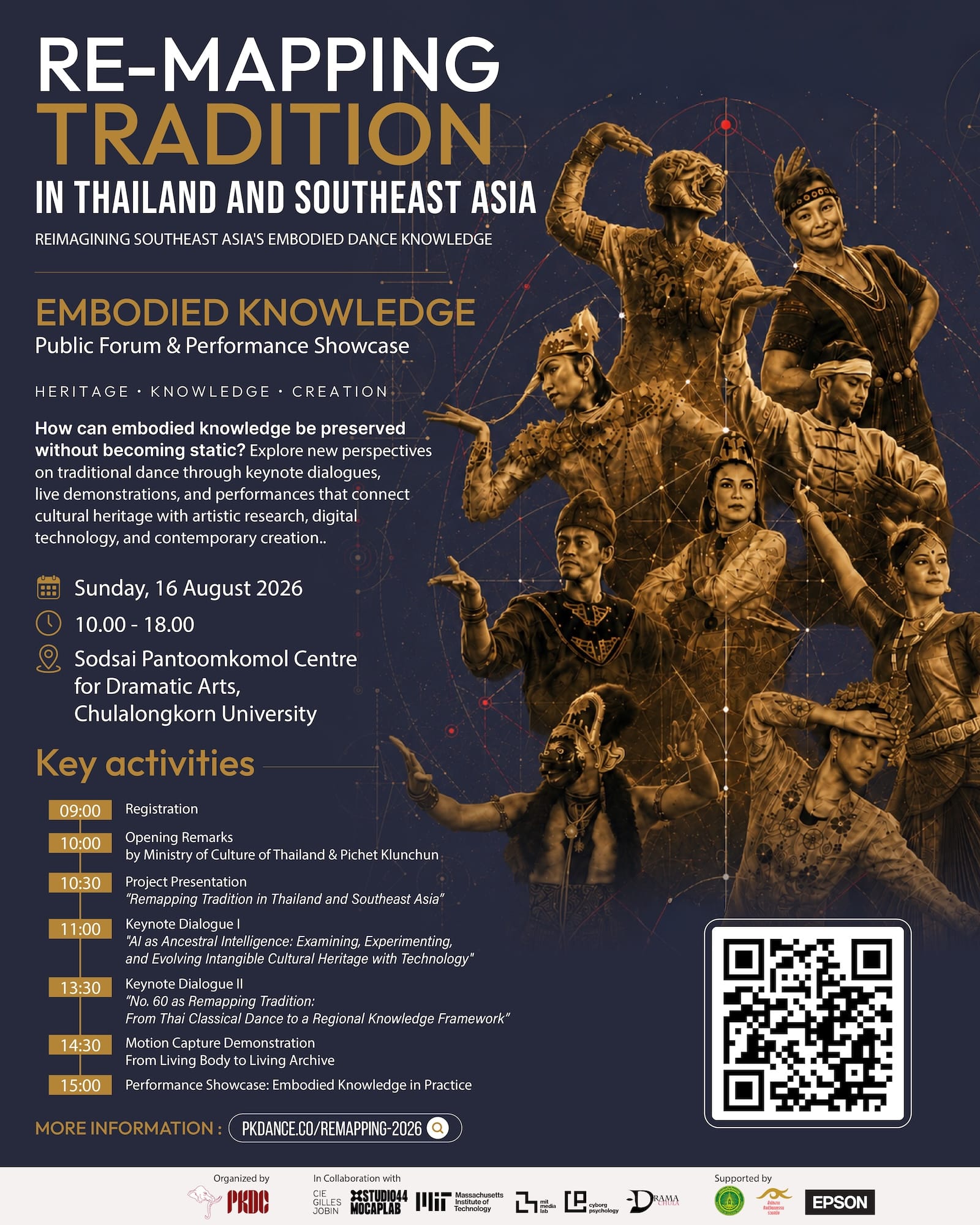
- Date: Sunday, 16 August 2026
- Time: 10.00 AM – 6.00 PM
- Venue: Sodsai Pantoomkomol Centre for Dramatic Arts, Faculty of Arts, Chulalongkorn University, Bangkok
- Registration: click here
How can embodied knowledge be preserved without becoming static?
Remapping Tradition in Southeast Asia: Embodied Knowledge – Public Forum & Performance Showcase brings together artists, scholars, educators, creative technologists, cultural organisations from across Southeast Asia and beyond to explore new ways of understanding, documenting, and transmitting embodied cultural knowledge.
The event presents the outcomes of two interconnected initiatives:
- Remapping Tradition in Thailand and Southeast Asia – Phase 1, supported by the Department of Cultural Promotion, Ministry of Culture, Thailand, which focused on research, documentation, and comparative movement analysis of traditional dance practices across Southeast Asia.
- Phase 2 – Embodied Knowledge Laboratory (10–14 August 2026) with Public Forum & Performance Showcase (16 August 2026), supported by the Office of Contemporary Art and Culture (OCAC), Ministry of Culture, Thailand, Studio 44 MocapLab / Cie Gilles Jobin, and EPSON, where traditional dance artists from nine Southeast Asian countries collaborated with researchers, choreographers, and motion capture specialists to investigate how movement can be analysed, documented, reinterpreted, and transformed into new forms of artistic, educational, and digital knowledge.
Rather than viewing traditional dance as a static cultural heritage, the programme approaches it as a living body of knowledge—one that continues to evolve through artistic practice, research, dialogue, and technological innovation.
Featured Themes
This event explores questions including:
- What new possibilities emerge when artists, researchers, and technologists collaborate across disciplines and cultures?
- How can traditional dance be understood as embodied knowledge rather than simply cultural heritage?
- What role can movement analysis and diagramming play in documenting and transmitting dance traditions?
- How can motion capture and artificial intelligence contribute to artistic research and cultural transmission?
Organizers and Collaborators
The programme on August 16th is organized by Pichet Klunchun Dance Company (PKDC), presented in collaboration with the Cyborg Psychology research group at the MIT Media Lab, Cie Gilles Jobin / Studio 44 MocapLab, and the Department of Dramatic Arts and Faculty of Arts, Chulalongkorn University.
Programme Schedule
09.00 – 10.00: Registration
10.00 – 10.30: Opening Remarks
10.30 – 11.00: Project Presentation: Remapping Tradition in Thailand and Southeast Asia
11.00 – 12.30: Keynote Dialogue I: AI as Ancestral Intelligence: Examining, Experimenting, and Evolving Intangible Cultural Heritage with Technology
12.30 – 13.30 Lunch Break
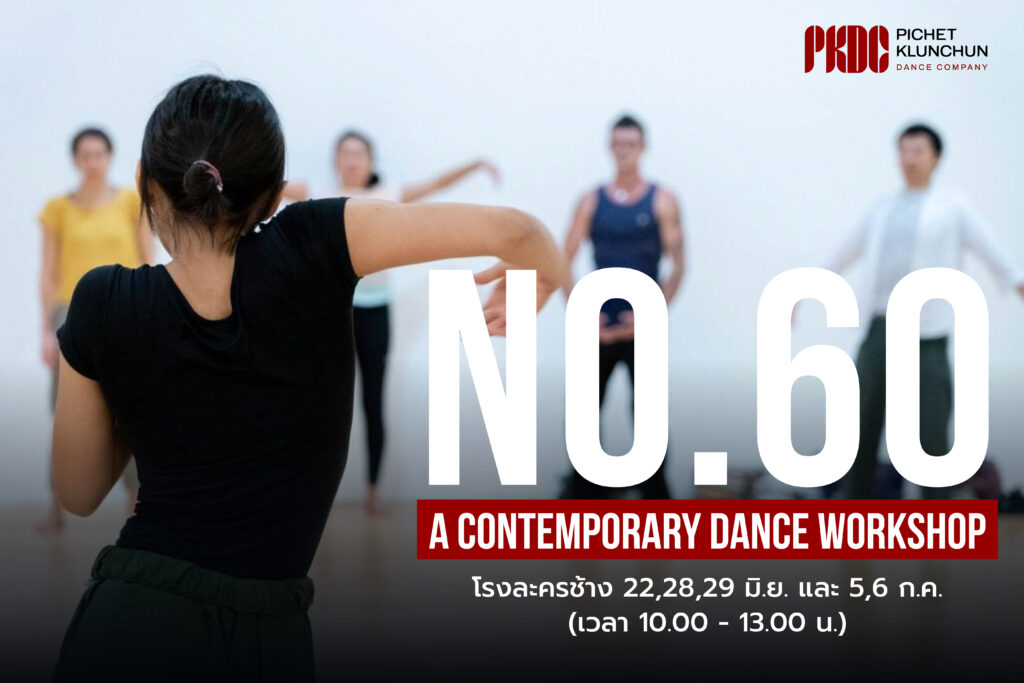
13.30 – 14.30: Keynote Dialogue II “No. 60 as Remapping Tradition: From Thai Classical Dance to a Regional Knowledge Framework”
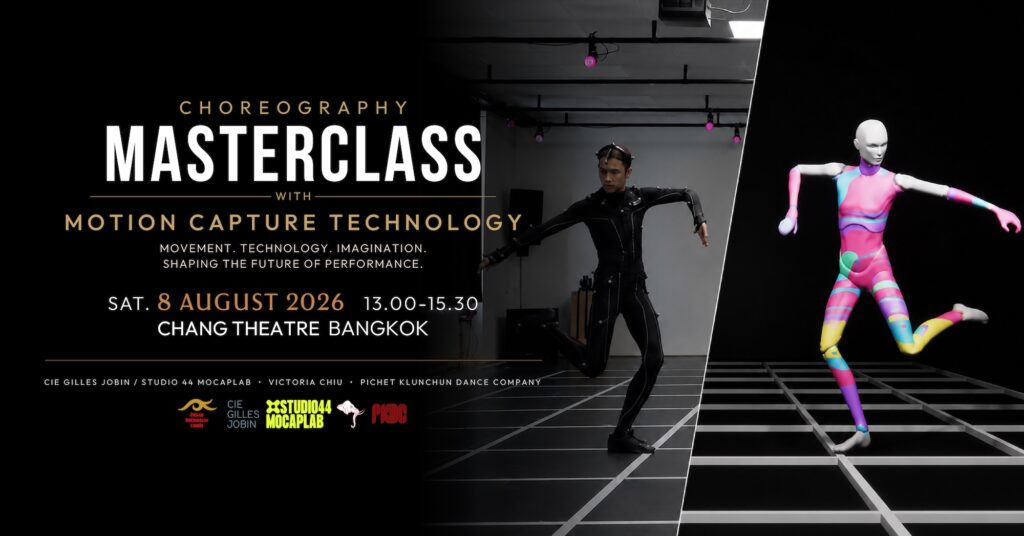
14:30 – 15:00: : Motion capTURE – Live Demonstration: From Living Body to Living Archive
15.00 – 17.00: Performance Showcase: Embodied Knowledge in Practice & Artist Dialogue
Who Should attend?
This event is open to:
- Dance artists and choreographers
- Researchers and scholars
- Students and educators
- Museum and cultural professionals
- Creative technologists
- Arts administrators and policymakers
- Anyone interested in the future of traditional performing arts, artistic research, and emerging technologies.
Registration
Participation is free of charge, but advance registration is required as seating is limited.